
Submitting evidence to the Young People and Work report

We welcome the opportunity to submit evidence to the Department for Work and Pensions call for evidence on their Young People and Work report. This report will seek to understand the drivers of the increase in numbers of young people who are Not in Education, Employment, or Training (NEET), investigate the root causes of economic activity, and make recommendations for policy responses aimed at increasing opportunities for young people.

Introduction

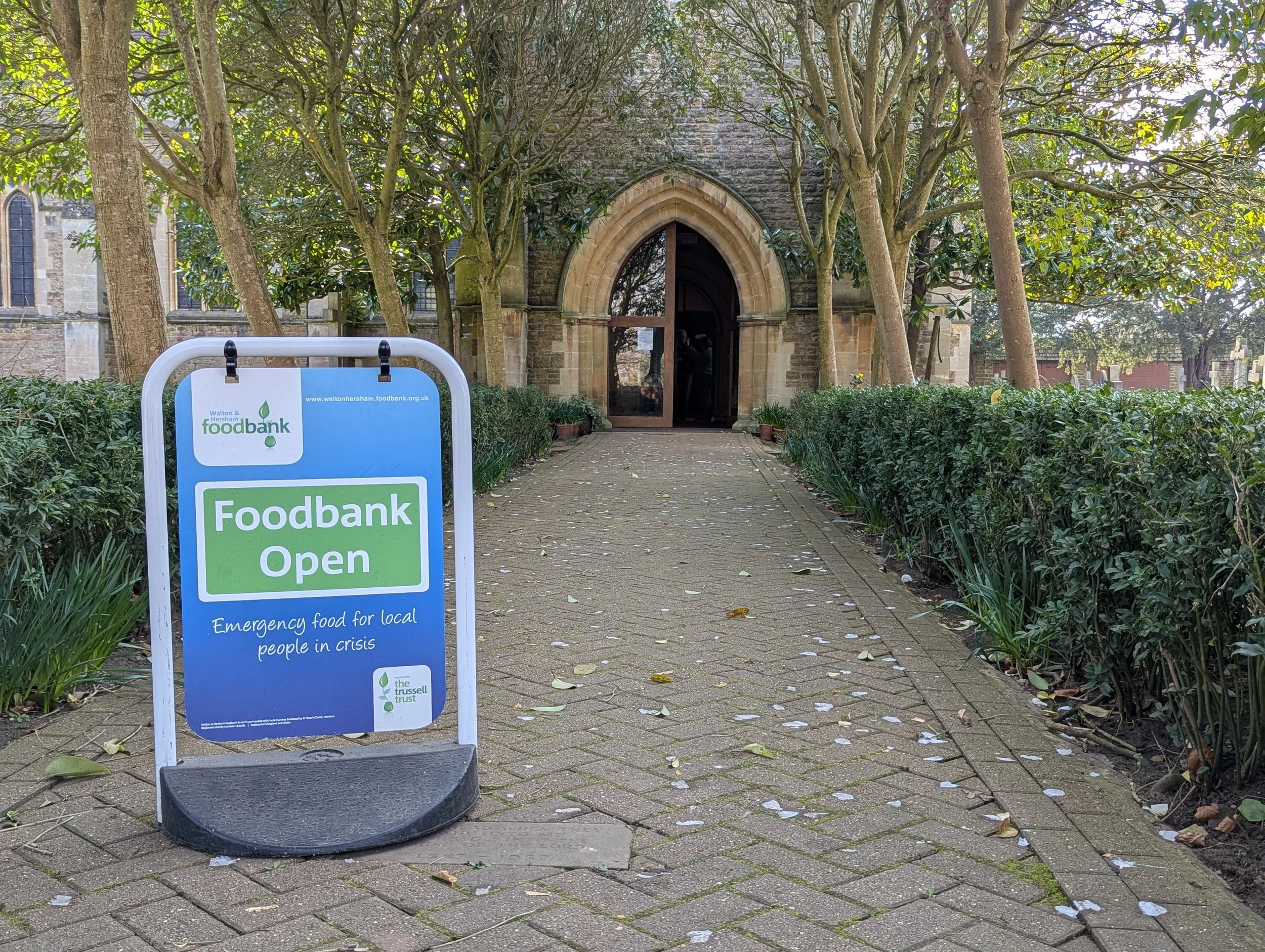
Walton Charity is a charitable foundation based in Elmbridge, Surrey. Through our long-standing role supporting individual and families experiencing poverty, housing insecurity, and issues with educational attainment and health, we are well placed to respond to this consultation. Through our foodbank and community hub The Bridge, as well as our grant-making and policy research, we see first-hand how systemic barriers affect young people’s ability to engage in education, employment, and training.

To inform this response, Walton Charity spoke directly with two of our partner organisations: Citizens Advice Elmbridge West’s 16-24s Youth Service, and Rentstart’s 18-30 Wellbeing Support service, the latter of which supports young people across Surrey who are facing complex challenges and may be contemplating suicide or self-harm. Their insights highlight lived experience and the realities for young people navigating poverty, disrupted education, insecure housing, and family breakdown. These perspectives strongly align with what Walton Charity observes through our own services and community connections.

What is stopping more young people from participating in education, employment, or training?

Young people face a complex set of overlapping barriers to participation in education, employment or training. Our partner organisations were clear that a lack of motivation is not the issue. Almost all the young people whom they work with want to work and build a better future, but structural, financial, and social barriers prevent them from doing so.

One major barrier to education, employment, and training is a lack of awareness and accessible information. Many young people do not know which opportunities exist locally, particularly alternatives to academic routes, such as apprenticeships or paid training. This is reinforced by research Walton Charity commissioned from Survation in 2025, which found that 50% of 18-24-year-olds in Elmbridge would not know where to access help or advice if they were struggling financially, revealing that key information on a range of topics is not communicated effectively to young people.

Educational disadvantage also plays a significant role in being a barrier. Many young people have learning difficulties or neurodivergence such as ADHD and autism, often undiagnosed, and are not given the right support at the right time in school. As a result, they may leave education without qualifications or confidence, carrying labels such as “underachieving” or “not smart enough”. These experiences are deeply demoralising and can have long-term effects on self-belief and willingness to re-engage with traditional systems.

Poverty and financial pressure are also barriers. Walton Charity sees young people at our foodbank and community hub who are facing barriers to employment or are living in households under severe cost-of-living strain, including working families. Research Walton Charity commissioned from the New Economic Foundation (NEF) shows that 68% of people in poverty in Elmbridge live in working households, demonstrating that employment alone is not a guaranteed route out of poverty locally. We also know from our partner organisations that in some cases, young people leave education early to contribute to rent and bills. This means that some young people are being pushed prematurely into low-paid or unstable work, creating a cycle of in-work poverty, limiting their long-term prospects.

NEF research highlights that real wages for typical and low-paid workers have stagnated or declined over the last decade, as inflation has consistently outpaces pay growth. In addition, Survation research found that 52% of 18-24-year-olds in Elmbridge struggle to afford their energy bills, underlining the financial precarity facing young people even when in work.

On the other hand, the interaction between work and the benefits system can actively deter participation. Families containing young adults who access our services often tell us that taking on work would result in reduced benefit entitlement, leaving them financially worse off. This creates a fear of risk, particularly for young people considering entry-level or part-time roles. Additionally, when the rules around benefit entitlement are unclear, young people may disengage from work completely. Reducing the risk of entitlements being withdrawn, as well as increasing wages and making employment rights clear would remove a major structural barrier.

In cases of in-work poverty and benefit restrictions, work is not an appealing prospect nor a guaranteed route out of poverty.

Stigma and low expectations further enforce these barriers. Young people can experience stigma from employers who may assume they are unreliable or disengaged. Some come from families where long-term reliance on benefits has normalised low expectations, not because of a lack of aspiration, but because opportunities have historically felt unattainable. The significantly negative impact of social media can also intensify feelings or perceptions of stigma, failure, and inadequacy, increasing isolation and disengagement.

Finally, there are significant practical barrier, including the cost of courses, travel expenses, poor transport links and limited opportunities for those with no prior experience. Without sustained, personalised support in navigating these challenges, many young people fall through the gaps at critical transition points, preventing them entering education, employment or training.

What would make the biggest difference to support more young people to participate?

Early, individualised and sustained support makes the biggest difference. Young people are still at a stage where change is possible, but only is systems engage them in ways that are flexible, encouraging and engaging. Proactively promoting opportunities is also essential. Young people need clear, accessible information about what is available to them, particularly paid opportunities such as apprenticeships and entry-level roles that do not rely on traditional classroom learning. Paid opportunities and meaningful financial incentives are critical, particularly for young people experiencing poverty. Walton Charity advocates for employers to pay the Living Wage, as the high cost of living in the Elmbridge borough currently means that many young people are working but still struggling to afford the essentials.

Role models and lived experience also matter. Young people need to see realistic, local examples of success to believe that change is possible and to help them make goals. Additionally, designing services for young people that promote education, employment and training by gathering input from young people themselves is a key way of improving engagement. At national and regional levels, policies are often designed without input from those most affected, leading to low engagement and poor outcomes. At Walton Charity, and at our partner organisations, we emphasise the importance of involving people with lived experience in decision-making processes to create effective and engaging services.

“It’s about setting realistic goals because young people love to achieve. They love to start something and complete it. That sense of accomplishment is so important for young people. If they don’t have that, their sense of worth starts to deteriorate” - Cyrus, 18-30 Wellbeing Support Service Project Lead

Finally, greater investment in youth infrastructure and community spaces would be beneficial. At Walton Charity, we understand the importance of creating safe, welcoming spaces of peer-support that can help challenge intergenerational disadvantage and support young people’s long term participation in education, employment and training.


Written by Amy Dixon, Walton Charity’s Policy and Communications Officer

30 January 2026
Janette Butler
Our reaction to the Child Poverty Strategy

The government has published its long-awaited Child Poverty Strategy, setting out a range of measures it says will lift 550,000 children out of poverty by 2030. If this is achieved, it would represent the largest reduction in child poverty in a single parliament since records began.

At Walton Charity, this commitment to reducing child poverty is welcome. We see the devastating impact of child poverty through our expanding grant-making programmes, our work at The Bridge and our foodbank, and through our long-standing relationships with local organisations working with families in Elmbridge.

The scale of child poverty in the UK

Child poverty in the UK remains unacceptably high. In 2023/24, 4.5 million children were living in relative low-income households - around 900,000 more than in 2010/11. Even more concerningly, around 2 million children are living in deep material poverty, meaning their families cannot afford essential items such as food, heating, or housing.

In 2023, 13.4% of children in Elmbridge were living in poverty - this is over 4,500 children. In 2024/25, more than 1,800 local children were eligible for pupil premium funding and free school meals.

We know that the consequences of growing up in poverty are profound and long-lasting. Research cited in the Strategy shows that by the age of five, children eligible for free school meals are already five months behind their peers. By GCSEs, that gap has widened to more than 19 months. Later in life, adults who grew up in poverty are more likely to be unemployed or trapped in low-paid, insecure work, earning around 25% less than those who did not experience child poverty. There are also significant health impacts associated with poverty, and a lack of social mobility deepens these inequalities across generations.

What the strategy covers

The Child Poverty Strategy acknowledges the worsening child poverty and announces significant policies to bring about changes. The most significant of these is the removal of the two-child benefit limit, and you can read our full response here.

Other measures aimed at boosting family incomes and reducing the cost of essentials to lower the rate of child poverty include:

  • More accessible childcare for parents on Universal Credit returning to work, alongside the expansion of free childcare hours and the creation of additional school-based nursery places.

  • Extending free school meals to all children in households on Universal Credit from September 2026.

  • Investment in breakfast clubs.

  • Reducing the cost of infant formula.

  • Reducing the use of unsuitable temporary accommodation, including funding to end the illegal prolonged placement of families in bed and breakfasts.

  • Investment in Best Start Family Hubs.

Taken together, these measures recognise something we have known at Walton Charity for a long time: child poverty is not driven by a single, isolated issue, but by a combination of low incomes, high cost of living, childcare barriers, and inadequate social security. You can read our report on our foodbank clients that exposed the intersecting pressures that cause poverty here.

Reactions amongst the charity sector

Despite the positive policy announcements included in this strategy, some of those in the charity sector have expressed concern, including Barnardo’s, that the plans aren’t bold enough or legally binding. The government’s own analysis also suggests that around four million children will still be living in poverty at the end of this parliament. The Child Poverty Action Group welcome the announcement but state “there is much to do and we must now build on this momentum to achieve more tangible change for children”, which broadly echoes the general consensus of national charities in the families and poverty sectors.

Continuing our work

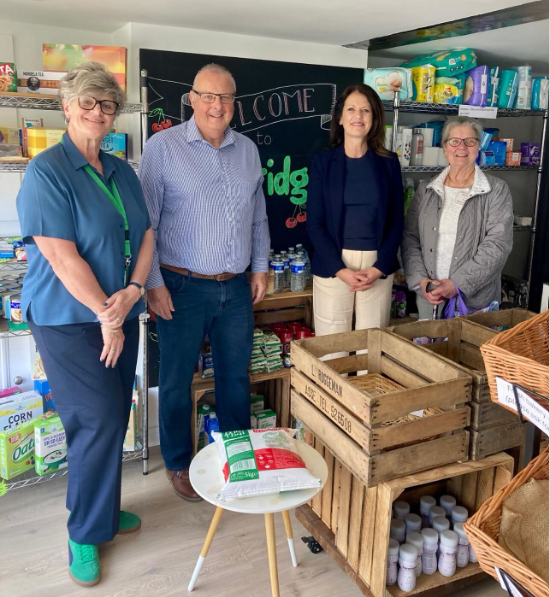
From our perspective, the risk is also that families with the complex challenges may continue to fall through the gaps, particularly families where parents are working and who are not entitled to government support. Demand for our foodbank and The Bridge (our shop-without-a-till for working families) continues to rise, with our busiest weeks on record happening just before Christmas 2025. This demand has prompted our plans to expand The Bridge into a pantry in the first half of 2026, so that we can support more families with household items and specialist advice.

We are pleased to see national action, but we know that it is on a local, personal level that child poverty is most keenly felt. Through our Poverty Truth Commission, we are gathering people in Elmbridge with direct experience of poverty and inequality with civic and business leaders, ensuring lived experience shapes decisions.

Our grant-making also supports organisations providing practical help, wraparound services, and advocacy and advice for families struggling financially. We see every day the importance of this flexible and proactive support, and the positive impact that dignified and client-led services have on our community.

This strategy is a welcome sign of progress, but we want to see more being done to fully break the cycle of child poverty. At Walton Charity, we will continue to listen to, and advocate for, families affected by poverty and adapt our support to best meet the needs of our community.


Article by Amy Dixon, Walton Charity’s Policy and Communications Officer

Janette Butler
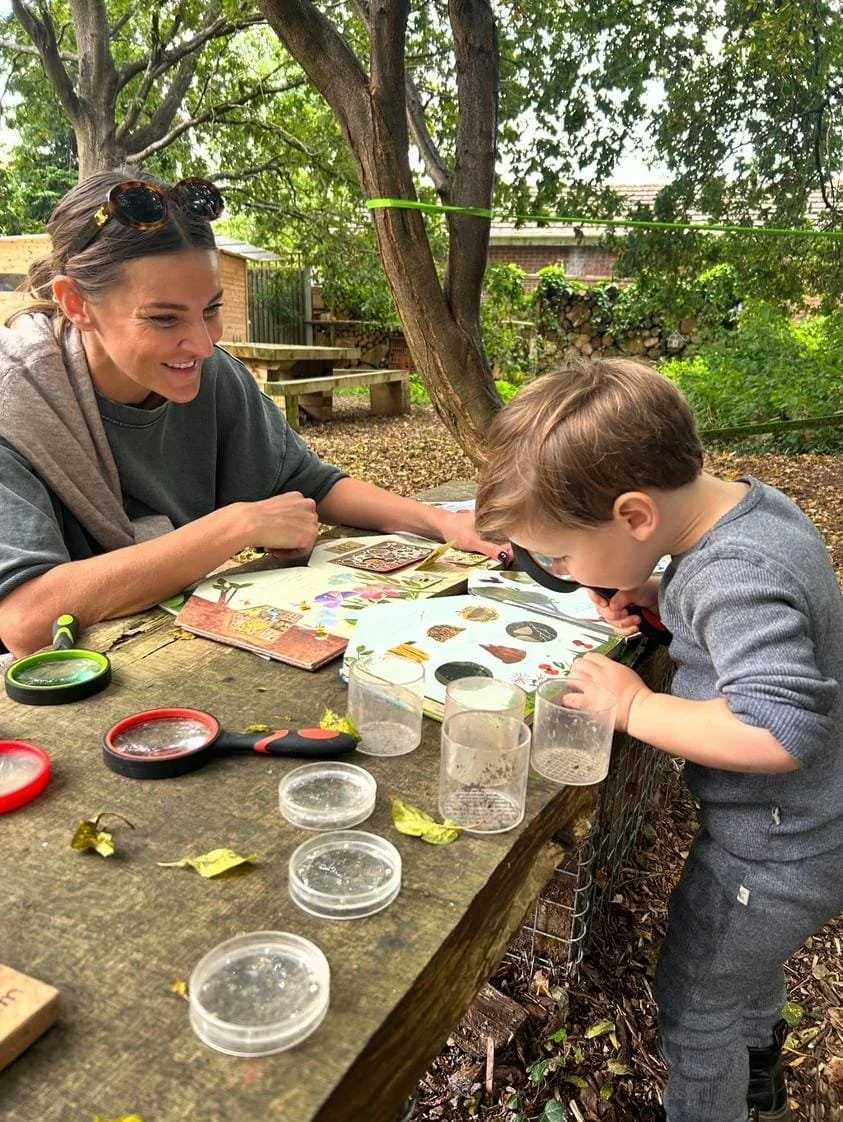
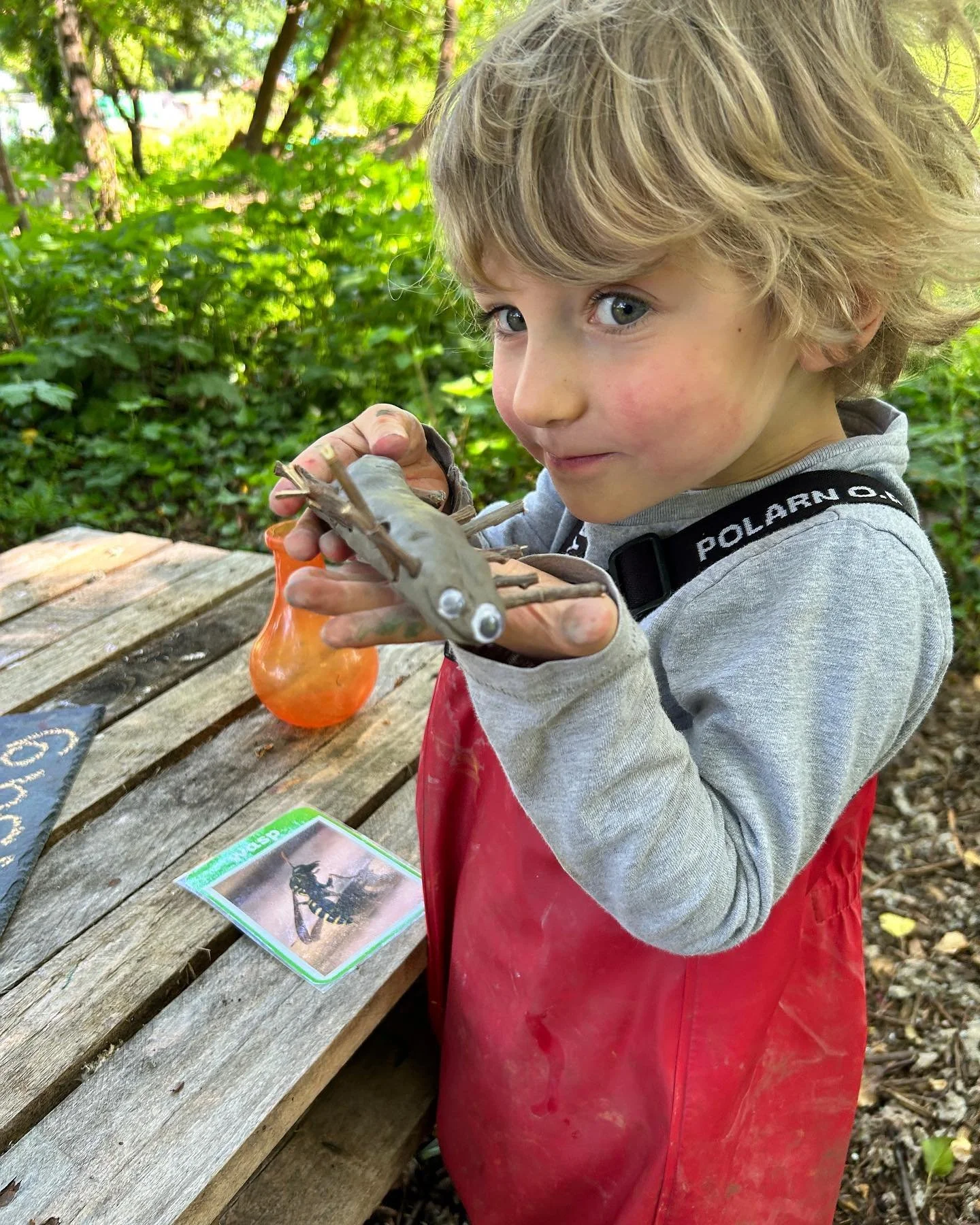
Impact of the Rewilding Forest School: supporting over 100 families
 

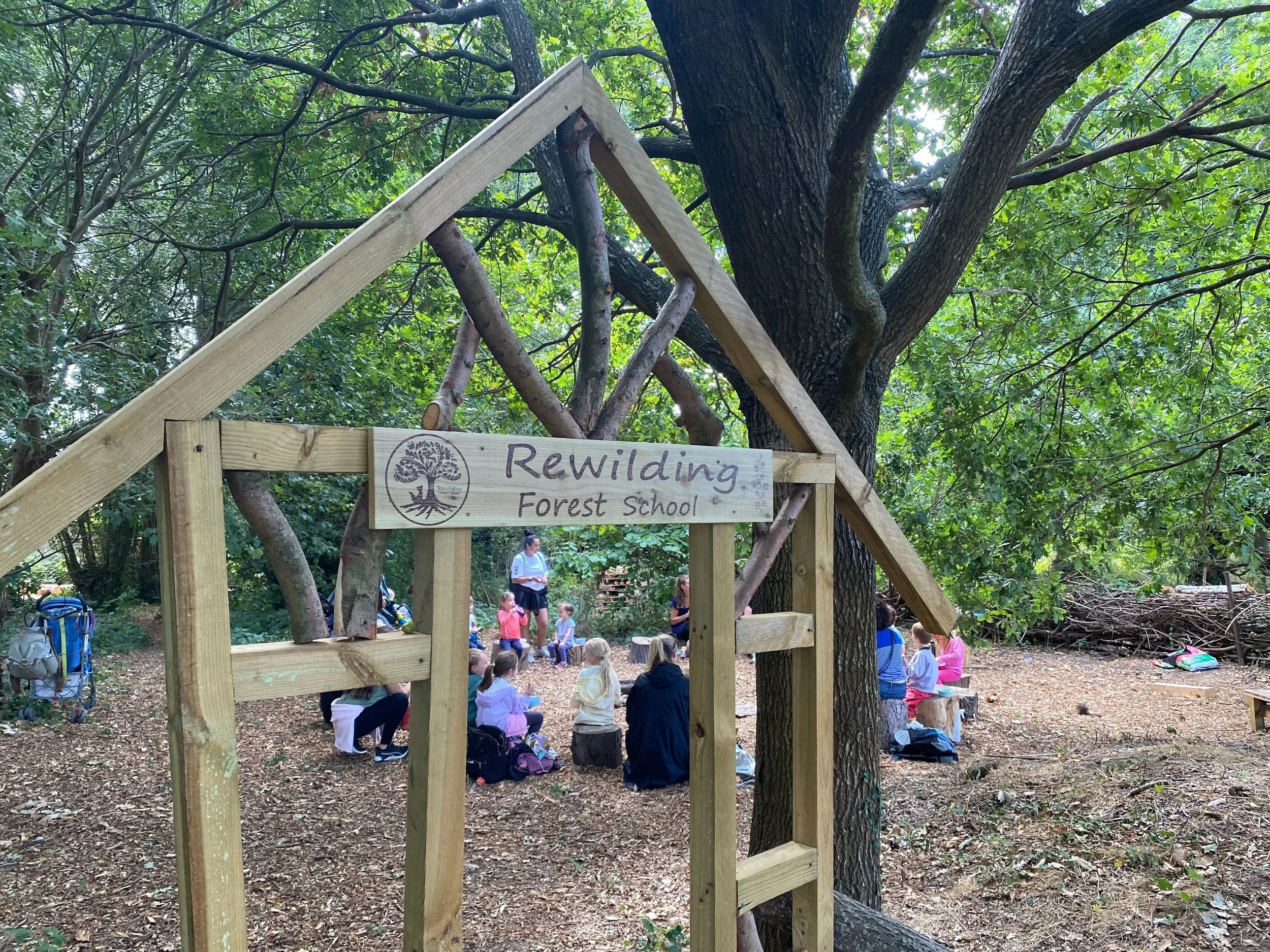
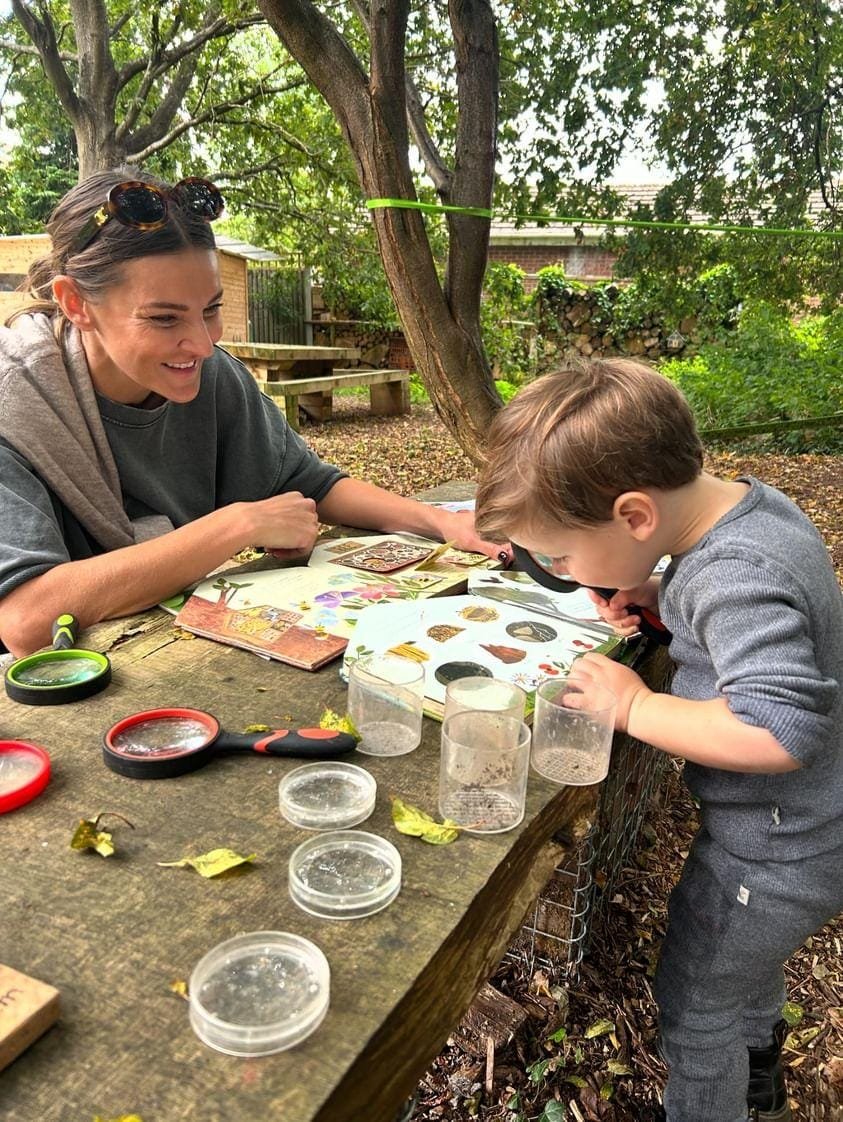
The Rewilding Forest School runs sessions on our Tree Canopy site, taking a holistic approach that nurtures children’s imagination, builds confidence, and encourages them to develop their curiosity and respect for the natural world.

Funding through the Mental Health Investment Fund (provided by Surrey County Council in partnership with Surrey Heartlands) has enabled us to offer families in our Elmbridge community discounted places to the Forest School, ensuring that children who might not otherwise be able to attend can still gain the benefits of being in nature and learning about the outdoors.

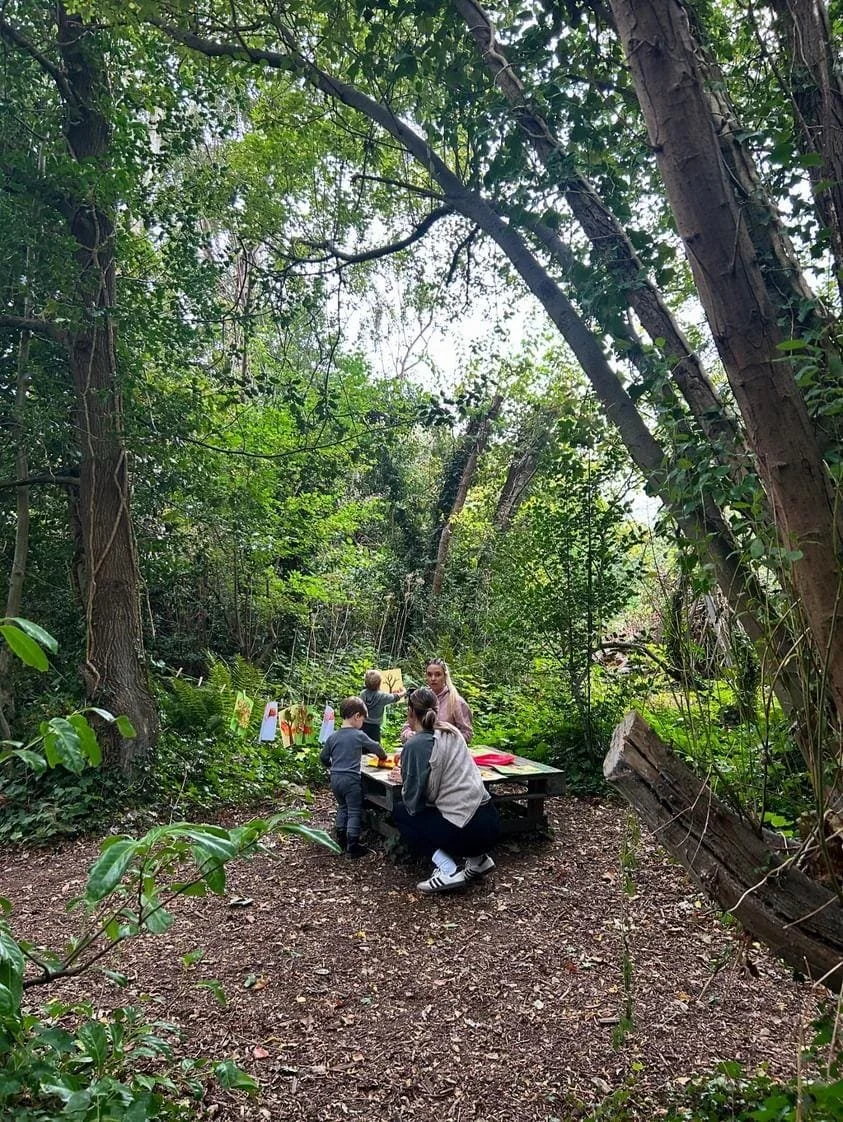
The Rewilding Forest School has established a thriving space at our Tree Canopy, where a supportive and growing community of families is attending the sessions, the majority of which are home educated or SEN. Thanks to the funding distributed by Walton Charity, they have been able to run two weekly sessions throughout the summer and autumn.

These sessions have given families valuable opportunities to build friendships and feel part of the local community, and children have learnt new skills, made new friends, and connected with nature, through learning and playing. The woodland Tree Canopy site is a safe and alternative setting for families struggling in mainstream school, and it is also a welcoming and suitable environment for neurodivergent children who sometimes struggle in busy school or social settings.

Through these funded places, Rewilding Forest School has supported children from over 100 families each month, 80% of whom are boys. Around 60-70% are home-educated or from neurodivergent families, groups that are typically harder to reach and engage with the generally limited mainstream support available.

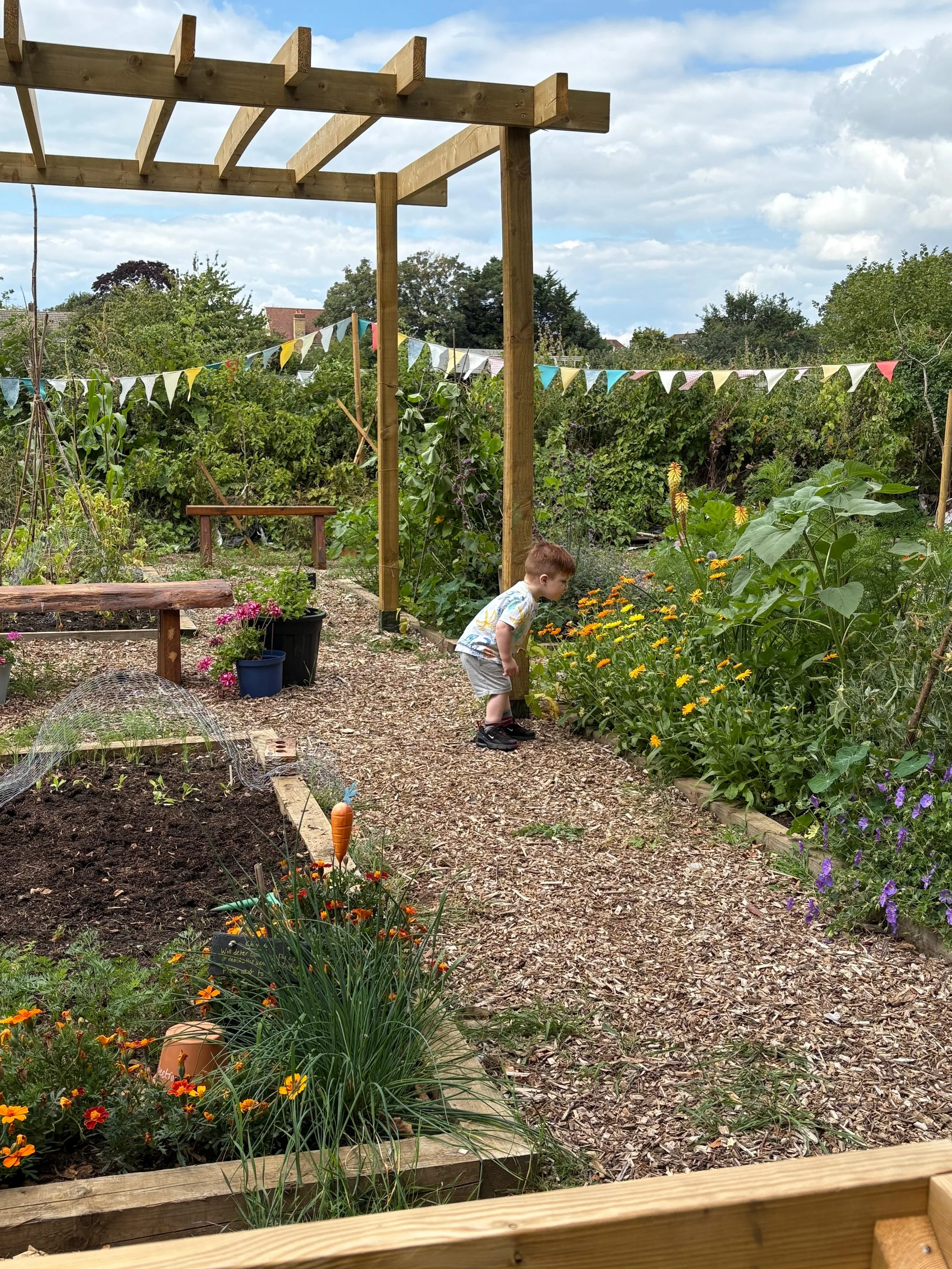
Walton Charity is incredibly fortunate to have acres of beautiful green spaces, and the Tree Canopy site in Walton-on-Thames is a fantastic example of a community-minded outdoor space. Multiple organisations run their sessions from our site, and these sessions focus on outdoor learning and wellbeing. This year, we opened our Space to Grow project, a garden open to local organisations and schools who want to feel the benefits of nature, learn new skills, and make connections to tackle isolation and loneliness.

You can read more about our green spaces here.

Article by Amy Dixon, Walton Charity’s Policy and Communications Officer

 
Janette Butler
Season's Greetings from Walton Charity

As we look back on 2025, we’re struck by how much has been achieved through the commitment, compassion, and resilience of our community. We are deeply grateful for the generosity and dedication of our partners. Every donation, hour volunteered, and conversation shared has played a huge part in our work this year. Together, we have made sure we meet the increasing needs of our community while also laying the foundations for our future.

As we move into the year ahead, we do so with realism, but also hope. 2026 will be a big year with our upcoming move to Church Farm in Hersham, which will see the expansion of our community hub into a larger, more accessible space.

Scroll down for some of our 2025 highlights - click on the pictures below to read more!


More than a Meal appeal

“Over the past year, there were times when I literally had no money for food,” says Jane*. “But pride stopped me from going to the foodbank. I’m a registered probation officer – I’ve always been the one giving out the referrals.”

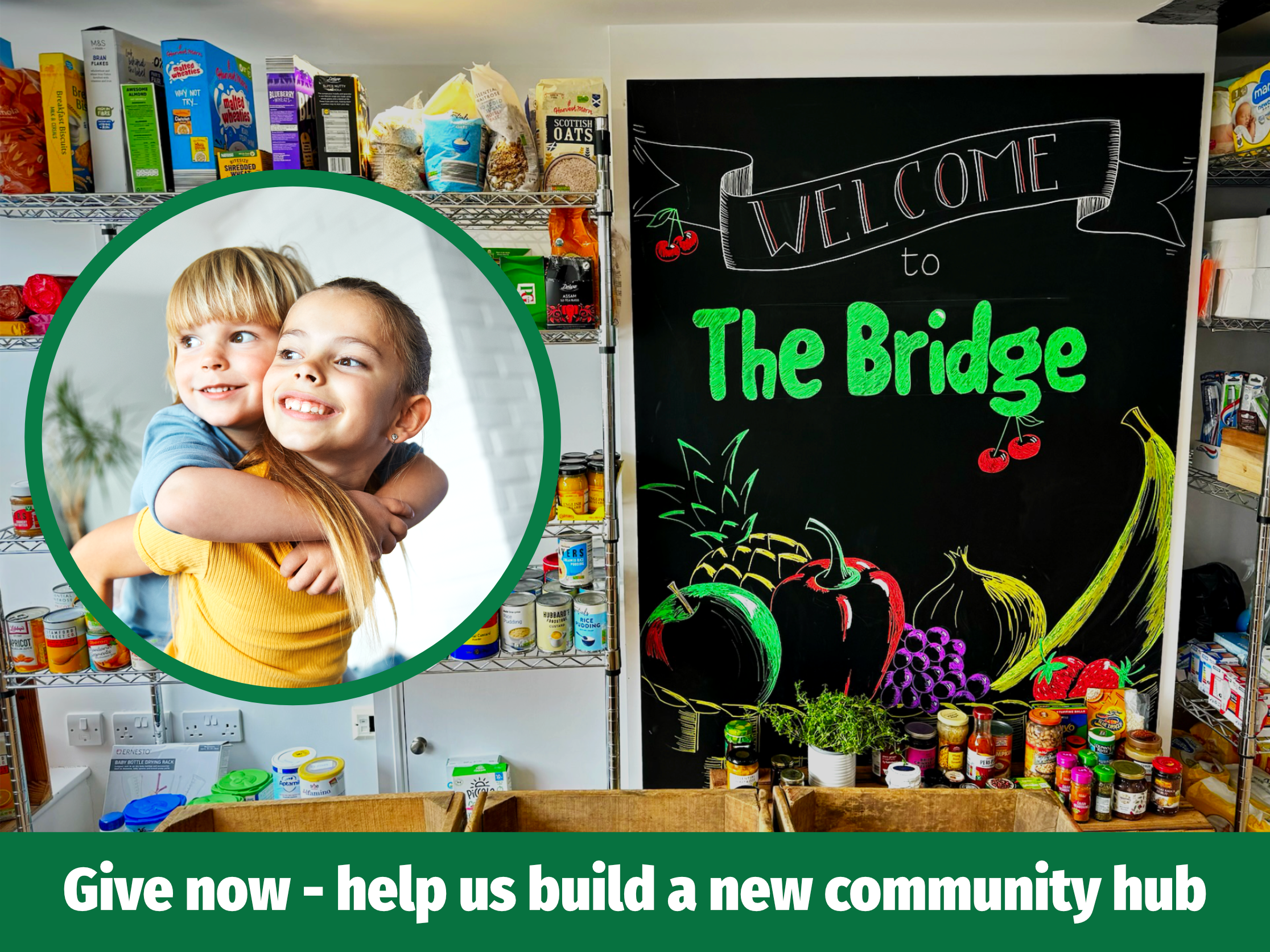
With your help, we’re expanding The Bridge into a larger community hub at Church Farm, Hersham where parents from working families can access a community pantry, practical courses, trusted advice and a friendly conversation when they need it most.

 
Donate today and maximise your impact
 
Janette Butler
Our reaction to lifting the two-child limit

26 November 2025

The UK Government has announced that the two-child benefit limit will be abolished in full from April 2026, marking one of the most significant changes to social security policy in nearly a decade. Introduced in 2017, the limit prevented families from claiming Universal Credit or tax credits for a third or subsequent child, affecting an estimated 1 in 9 children across the country.

Research also shows that 59% of affected families have at least one working parent, highlighting the policy’s disproportionate impact on low-income working households, a group we know is particularly affected by the rising cost of living. An open letter from Trussell argues how growing up in poverty scars children’s lives. It leads to shorter life expectancies, poorer educational outcomes, and worse physical and mental health. It also often means stress and isolation, hunger, and cramped and damp housing. It’s a situation that no child deserves.

The Chancellor’s announcement to scrap the two-child benefit limit is widely regarded by anti-poverty organisations as the single most cost-effective step the Government could have taken to reduce child poverty. The Child Poverty Action Group estimates that the change will lift 350,000 children out of poverty and reduce the depth of poverty for an additional 700,000 children across the UK. Families with three or more children will see their incomes rise by more than £3,000 per child each year - a transformational difference for households struggling to meet the costs of essentials like food and energy bills.

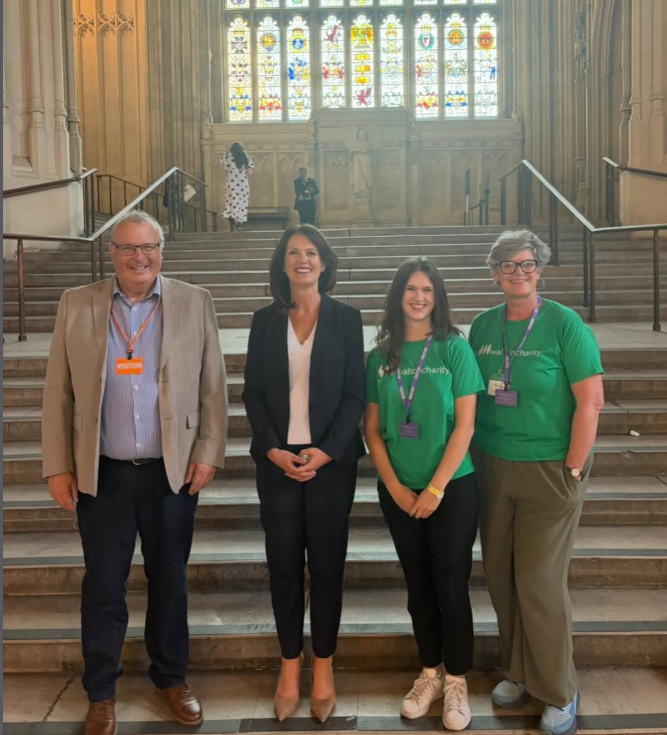
This is a significant step in the right direction to tackling child poverty in the UK. We know at Walton Charity that there has been an increasing demand for our foodbank and our community hub, The Bridge, which is specifically open to working families with children. Through our individual and community grants programme, we’ve also observed the growing pressure on our partner organisations that are working with local people to tackle the cumulative effects of high living costs and inadequate benefits. In the summer, we joined over 700 campaigners in Westminster to urge our MP to back a stronger social security system that ensures everyone can afford the basics. We also published our research on our foodbank clients and the reasons that they need to turn to us, and the results revealed that many of our clients had a long-term health condition, were single parents, or were working full-time or part-time to try and make ends meet.

We welcome this policy change and believe that it will help relieve the pressure on over-stretched households. Our CEO, Rob Mills, writes that “we are really pleased that the Government has ended the two-child benefit limit. We know from those families using our foodbank and The Bridge that the existing limit has a real impact on them. The scrapping of the limit will have a positive impact for many and will help lift many local children out of poverty”.

We are glad that national action aligns with our mission of creating a thriving community free from poverty and inequality and as we look towards 2026, we will ensure that our work continues to meet the changing needs of those living in Elmbridge.


Article by Amy Dixon, Walton Charity’s Policy and Communications Officer

Janette Butler
Learning and networking event for our fundholders

26 November 2025

 

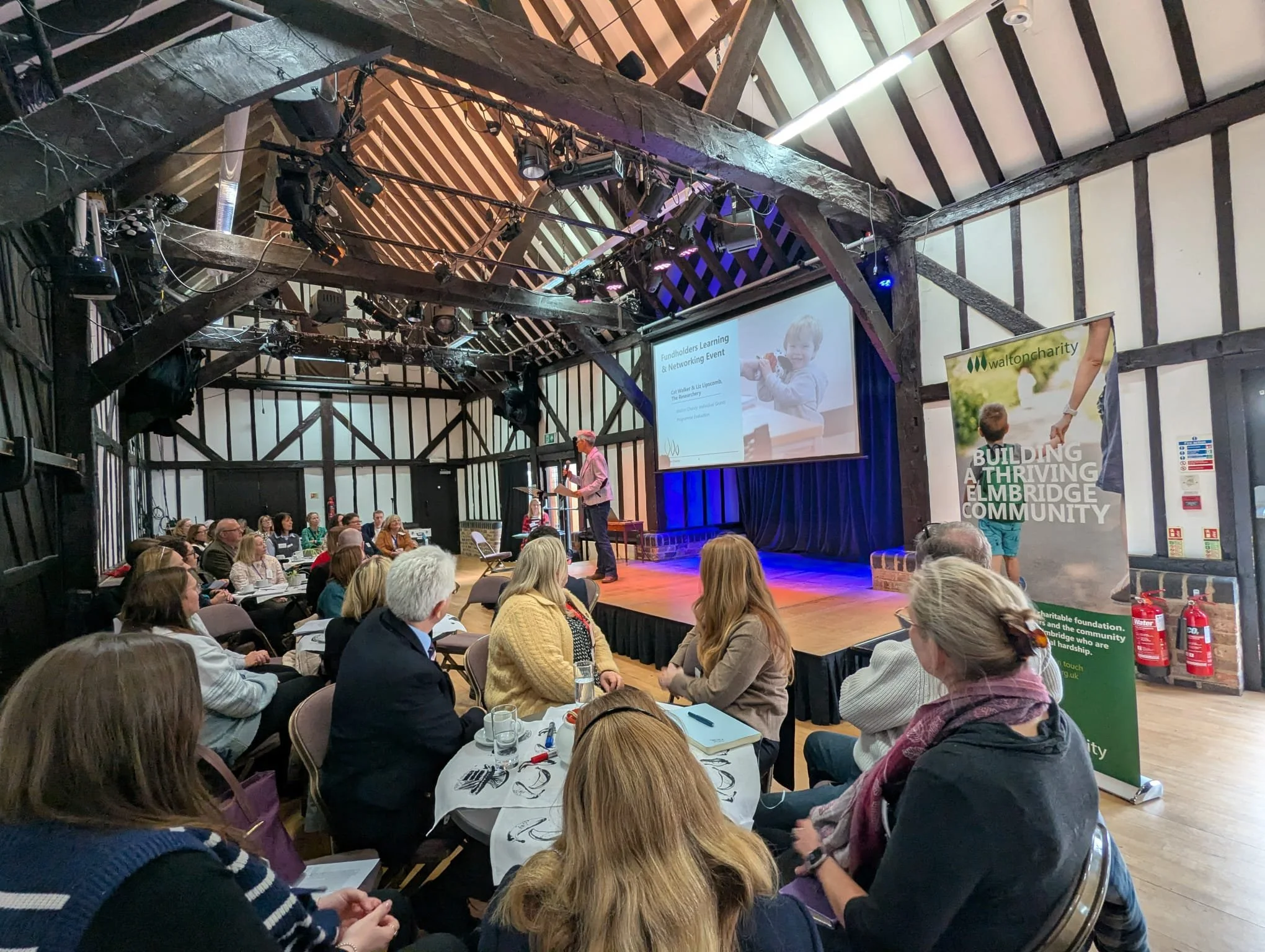
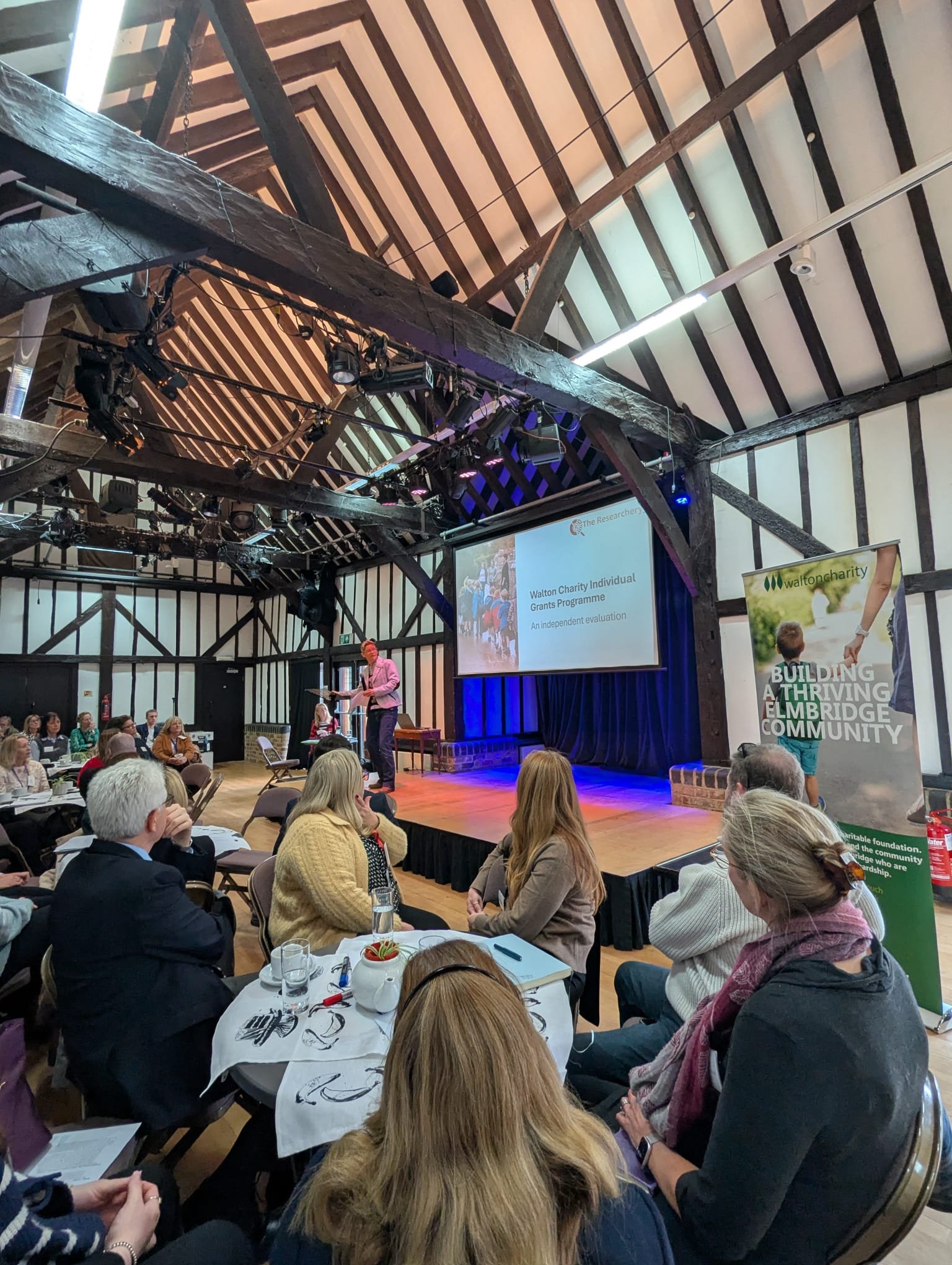
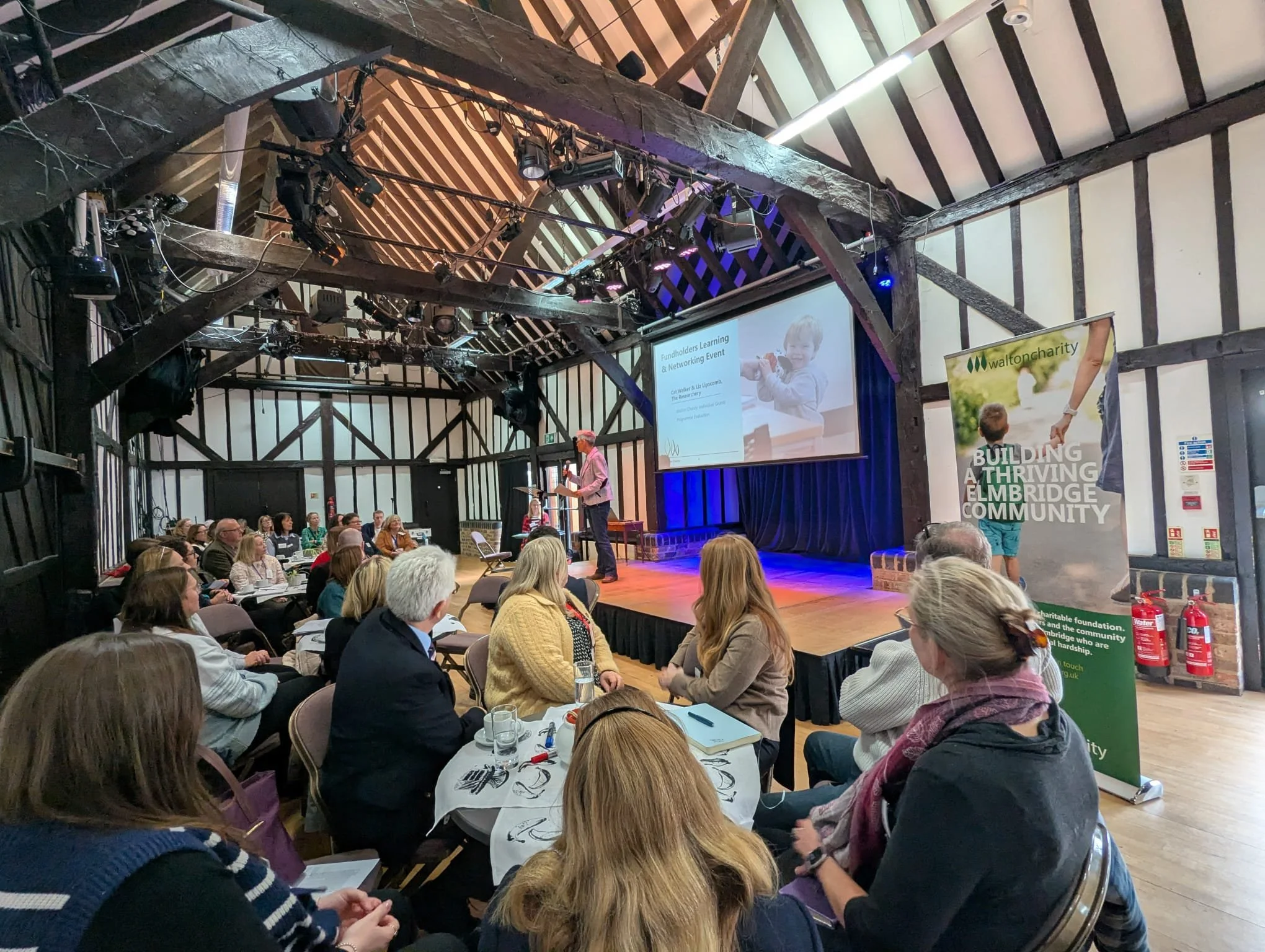
We were delighted to welcome over twenty of our fundholders to our learning and networking event. In a packed hall, our local partners came together to hear the findings from our external grant’s evaluation programme, share feedback, and shape the future of our grant-giving work across our borough.

The Researchery delivered an in-depth presentation, sharing the findings from our upcoming report about our individual grants programme. The presentation explored the impact and effectiveness of our funding and the way our place-based model can respond to local needs.

We then facilitated guided discussions about how we can continue to proactively fund local organisations and schools to meet the changing needs of Elmbridge, and gave our fundholders the chance to share their feedback and influence our future grant making.

The biggest highlight of our event was reinforcing the strong network of fundholders we have in Elmbridge. We are uniquely placed to facilitate strong connections within our community and are always thinking of ways to build on these working relationships and ensure continued collaboration.

We would also like to extend our thanks to the Riverhouse Barn for hosting us, and most importantly, our fundholders for their ongoing commitment to improving the lives of their students and local people through our grants. Together we continue to build a thriving Elmbridge community.

The full report will be published on our website in the near future.

 
It was interesting to hear the feedback from The Researchery... I also value the opportunity to network with other charities in our community. The broader our reach and understanding the better we can support our clients with their varied needs.
— Julia, Citizens Advice Elmbridge West


Between 2024-25, we have distributed over £800,000 in grant funding across our community, and continue to do this - and more - this year. Our individual grants programme supports local schools and partner organisations to support people across Elmbridge who need financial assistance.

  • Our Opportunities Fund currently goes to 23 local schools and can be used at the school’s discretion. We believe schools know their students best, so they are can spend the fund on any essential needs for any pupil experiencing financial hardship, even if their families are working. The grant has been used to buy school uniforms and fund school trips, as well as lots of other things. You can read more about how our grants have been used in this story from a local pupil.

  • Our Delegated Fund is allocated to organisations who work directly with people struggling with poverty and can be used to pay for essentials, such as food vouchers, transport costs to help people get to night shelters or interviews, and much more.

  • Our Vocational Fund is a direct grant to help with training and back-to-work costs for individuals who have been referred to us by an employment specialist.


Article by Amy Dixon, Policy and Communications Officer

 
Janette Butler
Please donate: More than a meal appeal

Real help means more than just a meal.

Give now and we will match your donation to reach those who need it most.

Right now, in Elmbridge, too many families are working hard but still struggling to put food on the table.

That is why we set up The Bridge, our community space offering a warm welcome to Elmbridge working families who are struggling with the rising cost of living. We’re here for those who are not eligible for government support and are falling through the cracks.

We know that helping our community to feed their families isn’t the end: it’s just the beginning.

With your help, we’re expanding The Bridge into a larger community hub that gives hope, dignity, and support in a place where parents can:

  • 🍽 Shop affordably at our new community pantry*

  • 💵 Join courses in budgeting, cooking, and wellbeing

  • 🗨 Get advice from someone who really cares

  • 🍵 Sit down and have a chat with one of our amazing team of volunteers

*A membership-based pantry is a community resource where members pay a small membership fee in exchange for regular access to affordable, nutritious groceries and household essentials.

And here’s the best part: your donation will be doubled, thanks to Walton Charity’s matched funding*! Every pound you give today will go twice as far to support local families.

  • 🪑 £30 would buy a chair that would become a place for parents to be listened to in a safe, supportive environment.

  • ⏱️ £50 would fund advice from a specialist advisor - supporting someone as they work through a tough time to help them find a path forward.

  • 📚 £150 would buy shelving to help us store and organise food, making our space more efficient and accessible for those who need it.

  • 🛒 £200 would help to fill cupboards and put nutritious meals on the table.

Please donate today via our JustGiving page!

Donate today and double your impact

*Donations will be matched up to £20,000.

Janette Butler
Elmbridge Poverty Forum unites local voices building community solutions

29 October 2025

On Friday 17 October, to mark the UN’s International Day for the Eradication of Poverty, we brought together over twenty organisations, plus foodbank volunteers and clients with lived experience, to discuss our collective responsibility to tackle poverty and inequality.

The energy in the room was inspiring, and we reignited crucial conversations about the hidden pockets of deprivation in our borough.

It was great to see that we all have the same thing in common - wanting to tackle poverty and inequality in one of the most unequal boroughs in the country.
— Rob Mills, Chief Executive, Walton Charity

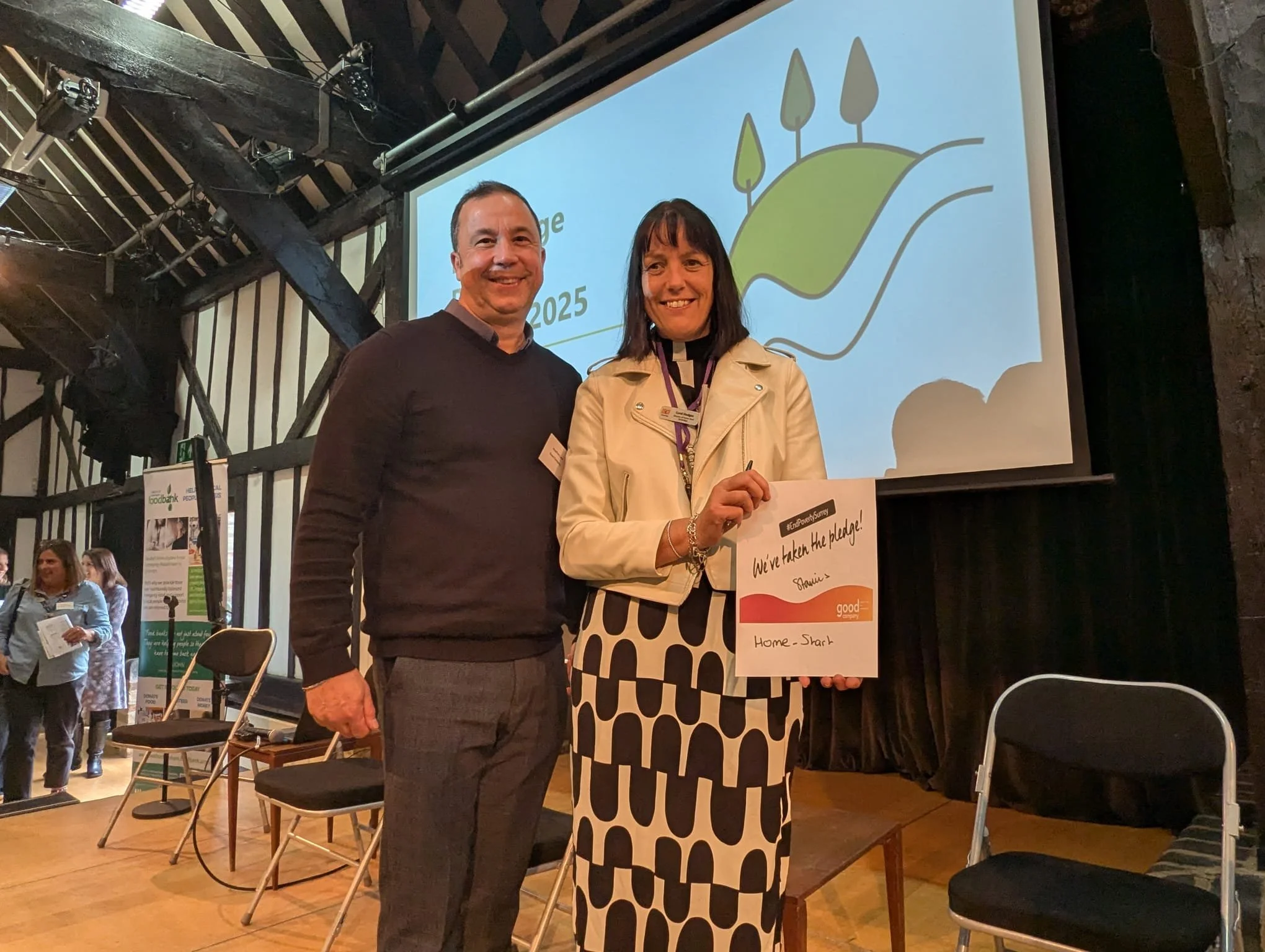
We were pleased to be joined by the Good Company who introduced the End Poverty Pledge, as well as Home-Start Elmbridge, CSVA, Stripey Stork, and Elmbridge Borough Council, who spoke about why they signed (or are hoping to sign) the pledge. Good Company also hosted a conversation between their commissioners who took part in their East Surrey Poverty Truth Commission (PTC) - a project that brought together people with lived experience of poverty with civic and business leaders to find joint solutions to pressing problems.

 
I was really proud that Walton Charity was able to host the Elmbridge Poverty Forum, bringing together such a diverse range of organisations from many local charity partners, as well as Elmbridge Borough Council, Surrey County Council, and representatives from Monica Harding MP’s office, as well as those in the cultural and business sectors.
— Rob Mills, Chief Executive, Walton Charity

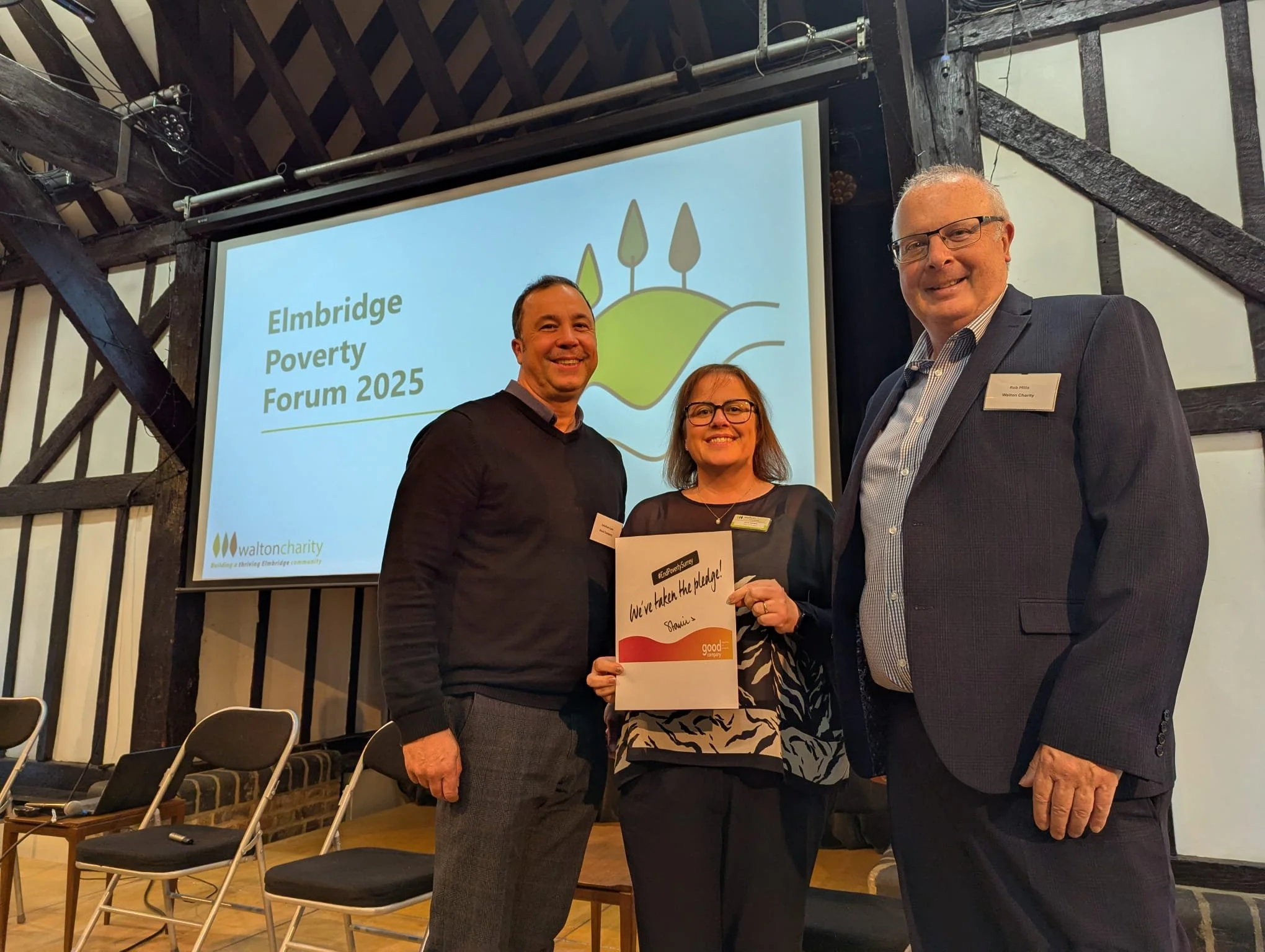
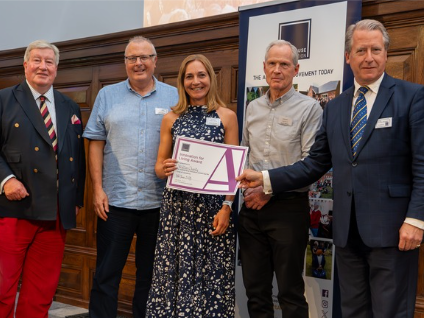
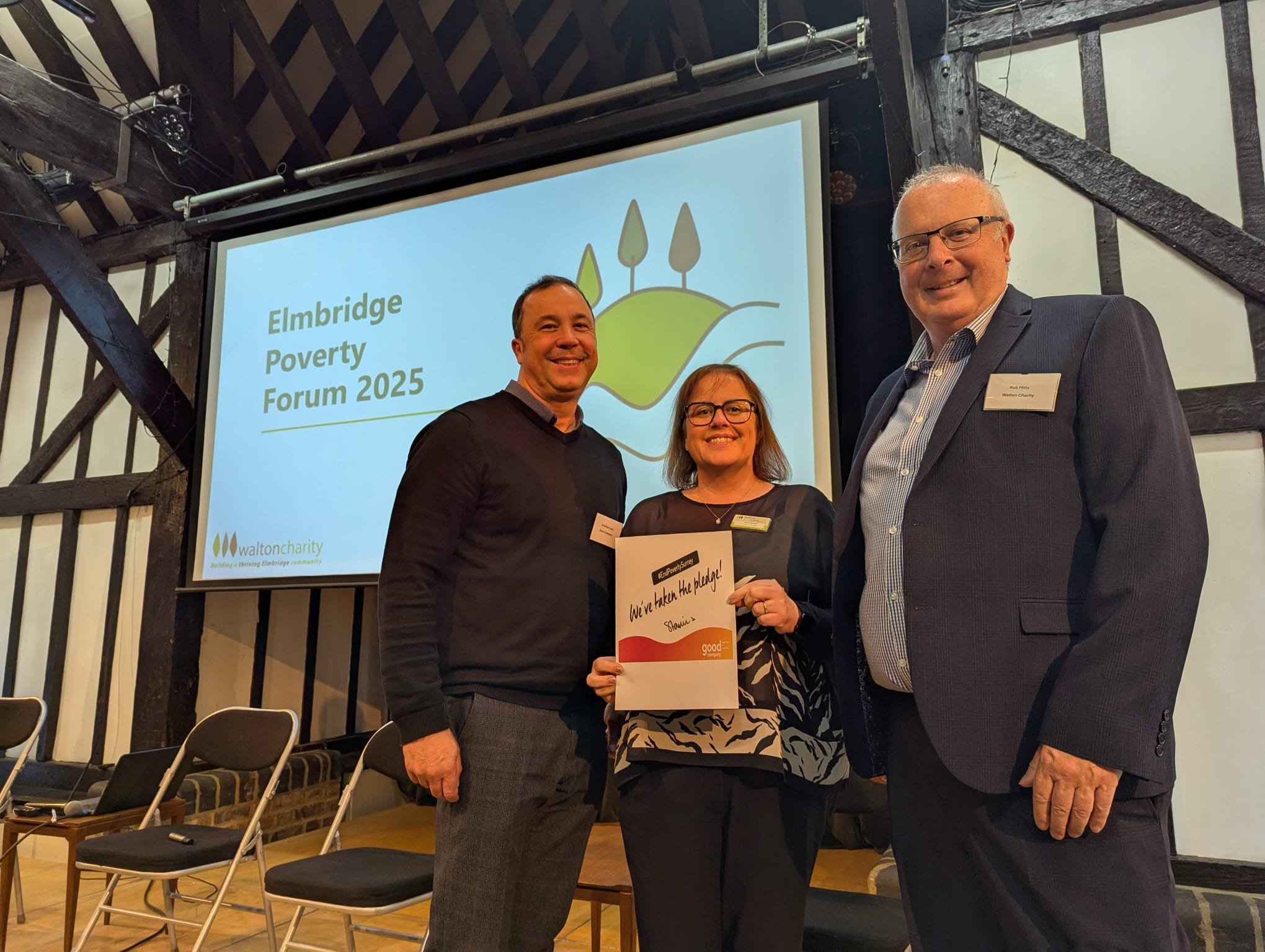
Following on from this, we announced Walton Charity’s plans to solidify and further our commitment to tackling poverty in our local area. We were proud to sign the End Poverty Pledge, and most excitingly, launch our own Elmbridge Poverty Truth Commission.

Signing the End Poverty Pledge!

From left to right: Jonathan Lees (Good Company), Sarah Tomkins (Chair of Trustees, Walton Charity), Rob Mills (Chief Executive, Walton Charity)

 
To support our Elmbridge Poverty Truth Commission, we’re now on the look out for community commissioners to share their experiences of financial hardship.
— Rob Mills, Chief Executive, Walton Charity

The launch of our own PTC sits alongside our other policy work, such as the recent publication of our foodbank client survey, and the development of our community hub, which is moving to its next phase. Our hub is expanding its services to offer more wraparound support and make it a more accessible, dignified experience for local people experiencing poverty.

We are also Living Wage Employers and Funders, meaning we are committed to providing our employees with the right wage that ensures a decent standard of living, and we encourage the organisations we fund to do the same.

We also announced that we will annually publish a review on our own initiatives to tackle poverty every 17 October.


Jonathan Lees (Good Company) joins Carol Hodges (Chief Executive of Home-Start Elmbridge) to sign Home-Start up to the End Poverty Pledge.

To conclude our event, we asked our guests to write down their thoughts about what they learnt from our presentations and what they plan to do in their organisations as a result. One person learnt that “everyone involved in supporting people in poverty should be talking to people in poverty”. Other guests learnt that “lived experience is powerful” and that “small actions can make a big difference”. Many people also wrote that they would sign up to the End Poverty Pledge, and some even proposed their own initiatives such as a poverty roundtable, poverty awareness training for staff, and participation in our upcoming Elmbridge Poverty Truth Commission.

Poverty is such a key subject that often gets ignored. This event was a great opportunity to raise the challenges that too many people in our society face alongside looking at ways of how we can begin to address some of these issues and support people to get out of poverty.
— Jonathan Lees, Good Company
 

The Elmbridge Poverty Forum was a great opportunity to discuss and raise awareness of key issues and commit organisations to tackling poverty in our local area.

We are very grateful to the Good Company for supporting this event, and to everyone who attended. We are delighted that Elmbridge-based organisations have signed up to the End Poverty Pledge as a result of Friday, including Families Thriving Together. They join the growing list of people committed to tangible actions that reduce poverty.

You can find out more about our Elmbridge Poverty Truth Commission by clicking here.


Article by Amy Dixon, Walton Charity’s Policy and Communications Officer

Janette Butler
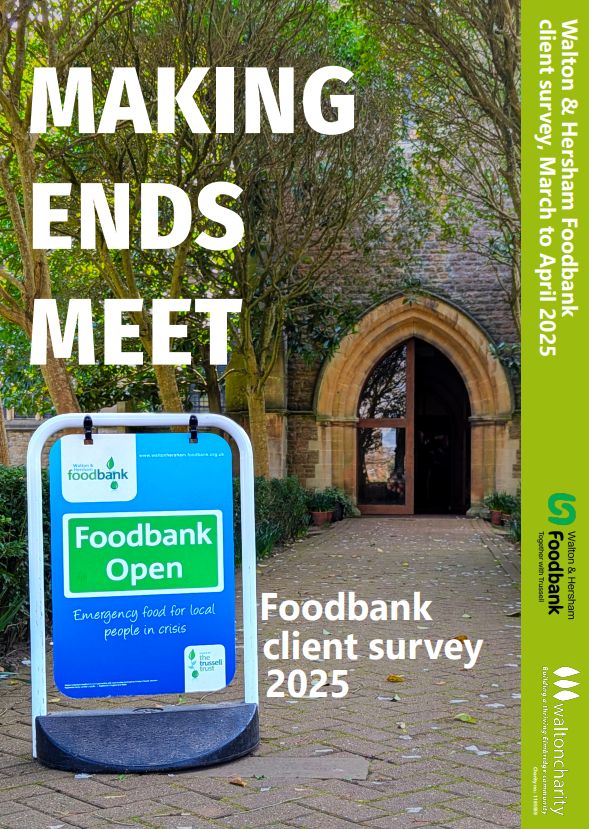
New report: Making Ends Meet - foodbank client survey

9 October 2025

Our new report, published in partnership with the Walton & Hersham foodbank, reveals the hidden reality of poverty in Elmbridge - a borough often associated with affluence, but where many families are struggling to get by.

The report, titled Making Ends Meet, surveyed 50 clients from across our foodbank distribution centres to understand who is turning to us, what challenges they face, and how our services can continue to respond effectively. Through face-to-face questionnaires, the study captured an in-depth picture of income struggles, health and housing crises, and the daily trade-offs that many local people are making to survive.

Despite Elmbridge ranking among the wealthiest areas in the UK, the findings reveal deep pockets of deprivation, particularly among single-parent households, people with disabilities and poor health, and those in insecure or low-paid work.

Key findings

  • 68% of foodbank clients live with a long-term health condition or disability.

  • 36% were single parents, many relying solely on Universal Credit, which they say does not cover basic essentials for their children.

  • Demand for the Walton & Hersham foodbank has risen by 40% since 2022, with 5,374 people fed in 2024-25.

One parent told our researchers:

“We ran out of nappies, and I don’t get paid until tomorrow…the foodbank gets me through the weekend”.

Another shared:

“Money just doesn’t last. All my bills are going up because of the cost of living”.

Beyond Emergency Food

Our report paints a clear picture of a broken social security system, where benefits and wages currently fail to meet real living costs. While our clients spoke warmly of the dignity and compassion shown by the foodbank volunteers, many said they expected to need our support in the near future.

These findings now guide Walton Charity’s next steps. Plans are underway to transition The Bridge in Walton-on-Thames into a membership-based community shop, offering affordable food and wraparound support to working families. This new model will complement the ongoing work of Walton & Hersham foodbank, which continues to make adaptations to its services to ensure they are effective, flexible, and people-centred.

A Call for National Change

At a national level, Making Ends Meet echoes findings from organisations such as Trussell and the Joseph Rowntree Foundation, reinforcing their calls for an Essentials Guarantee that ensures Universal Credit is independently assessed and increased to cover life’s basic costs.

You can read the full report by clicking on the button below:

Read the report

Or find the summary version by clicking on this button:

Read the summary

Report and article by Amy Dixon, Walton Charity’s Policy and Communications Officer

Janette Butler
Opportunities Fund Supports Holiday Camps and School Uniforms

October 2025

The Walton Charity Opportunities Fund currently provides grants to 23 schools in Elmbridge. The fund supports children and young people with learning and other enrichment activities when their families are going through financial difficulties. We believe that schools know their pupils best, so the fund can be allocated at their discretion for any school-related costs that they think the students and their families will benefit from.

We heard back from the parents of a local school who shared what our fund had been used for and the difference it had made to their children. Our fund is flexible and can be used for a range of reasons, including to fund holiday camp places and school uniform. We are really pleased to hear that it’s having such a positive impact.

 
The holiday camp is amazing. He goes in with a smile and comes out with one to ask if he can go back tomorrow. It’s a place where he can play all day and what child doesn’t like that?
— Local parent talking about the use of the Opportunities Fund
 
 
When she comes out [from the holiday camp] she’s always smiling and happy and has had a fun filled day. She’s always eager to tell me about her day and every time she’s been, there’s always been at least one new thing for her to do.
— Local parent talking about the use of the Opportunities Fund
 
 
Thank you for your financial help towards the school uniform. He is super excited to be going to secondary school and the money towards new shoes and a blazer has really helped.
— Local parent talking about the use of the Opportunities Fund
 

To find out more about the Opportunities Fund, click here, or click on these links to find out about our individual and community grants programme.


Article by Amy Dixon, Walton Charity’s Policy and Communications Officer

Janette Butler
"Investing in young people": Opportunities Grant - Letter of thanks from local student

29 September 2025

“I am truly grateful for your support in making this experience possible.

Thank you again for investing in young people".

We recently received a heartfelt letter from a local pupil who could take part in a special theatre trip thanks to our funding.

Through our Opportunities Grant, we fund a variety of schools in Elmbridge so that they can best support their children and young people with learning and other enrichment activities. We believe that each school is best placed to respond to the needs of their students quickly, so our grants can be flexibly used for anything from school uniform to school trips. No child should have to miss school because their parent couldn’t afford the uniform, or not be able to join a school trip with their friends because it was too expensive. Currently, we fund 22 local schools to ensure that every pupil gets the opportunity to thrive in education.

This pupil’s kind words are a lovely reminder of the impact our funding has on local people.

The full letter below describes how our fund was distributed by the school directly to the pupil to enhance their A-level course:

Dear Walton Charity,

I am writing to express my sincere thanks for your generous funding which enabled me to attend the recent theatre trip as part of my A-level drama course.

This opportunity has been incredibly valuable in supporting my studies. Experiencing live theatre has not only deepened my understanding of the subject but also helped me enjoy the extracurricular side of learning. It has given me new insights and inspiration that I can bring back into my coursework and performances, and it will make a real difference in helping me to achieve my A-level.

I am truly grateful for your support in making this experience possible. Without your generosity, I may not have had the chance to take part. Thank you again for investing in young people and for helping me to enjoy and succeed in my education.

With appreciation,

T M

We are so pleased to hear from this student and are delighted to see the impact our Opportunities Fund has on local young people. To find out more about our grant programmes, you can click here to see our other individual grants, or click here for more information on our community grants.


Article by Amy Dixon, Walton Charity’s Policy and Communications Officer

Janette Butler
Pre-loved School Uniform Pop-Up Shop 2025

August 2025

On Friday 15 and Saturday 16 August, Walton Charity hosted our second pre-loved school uniform pop-up shop.

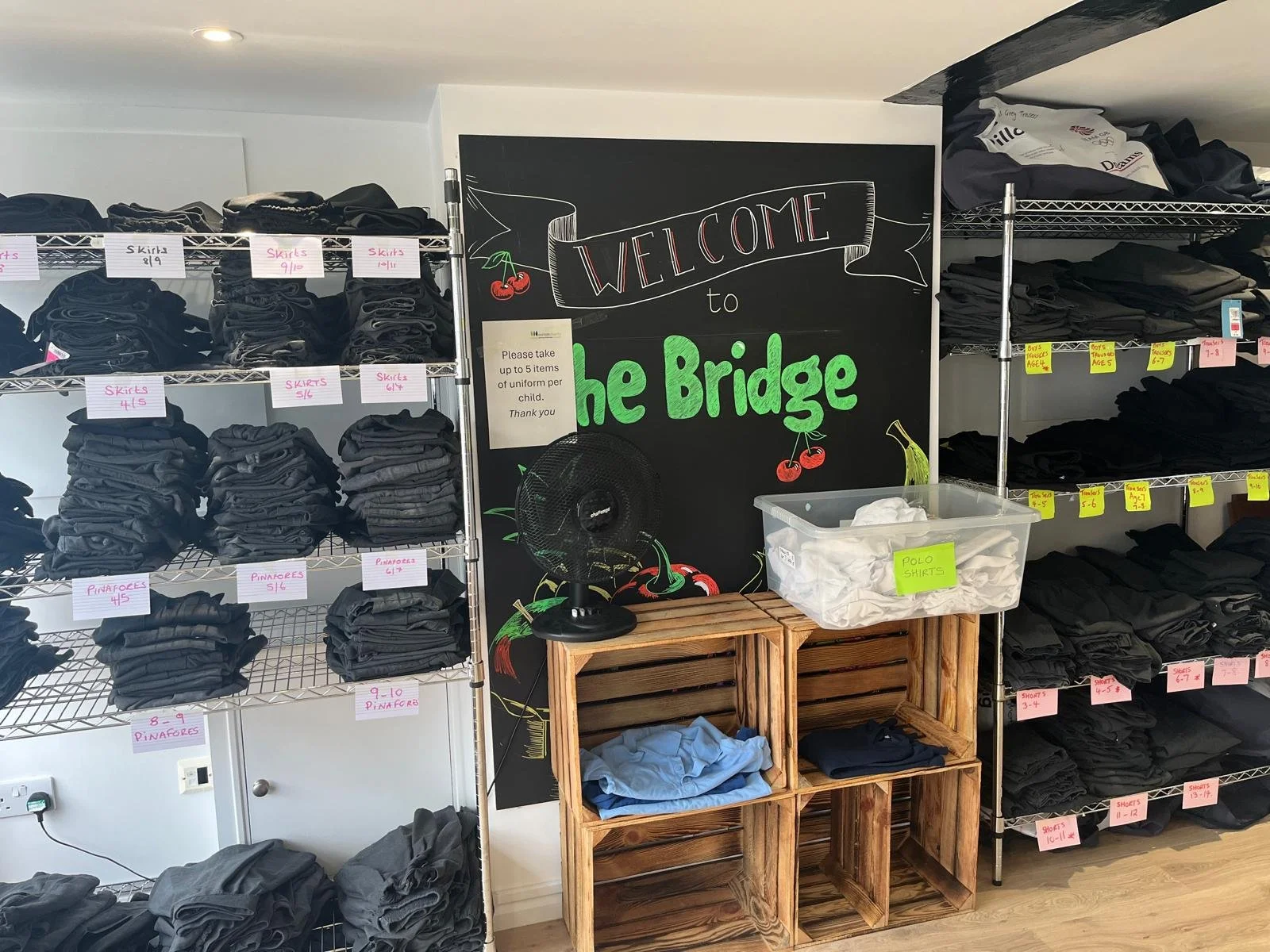
The event took place at The Bridge, our community hub in the centre of Walton-on-Thames. We transformed all three floors of the hub, which are normally set-up as our shop-without-a-till where working families who are struggling financially can access food and other support.

Please read the letter addressed to local schools that encourages change in school uniform policy:

Letter to schools - cost of school uniform: insights and recommendations.

Local parents will know that the return to school is an expensive time of year, with growing children regularly needing new school uniform, shoes, PE kit, and stationery.

You have no idea how grateful we are, this has taken so much monetary stress away.
— Local parent

Nationally, many parents are concerned about the rising costs of uniform, particularly branded items, which mean that they struggle to get all the items their children need by the time September comes around. Expensive branded items also mean that many items can’t be reused by other parents who have children in different schools, increasing the financial burden and the negative environmental impact.

That’s why we decided to open up The Bridge again this year and are so grateful for the huge amounts of high-quality, branded and unbranded items we received from generous members of the public and our partners at Stripey Stork.

On the day, we provided 95 Elmbridge families and 182 children with high quality, free items of clothing. In total, we distributed 962 items of clothing, shoes, PE kits, and rucksacks to local people!

We have calculated that we saved families in total an average of £6,817 across all unbranded items. But the pop-up shop was more than just a money saver. Feedback from the families on the day showed how offering a helping hand meant more than just free items of clothing. For some parents, it lifted a weight off their shoulders.

 
I am in tears, thank you and may you be blessed on behalf of me (a single mum) and my son.
— Local parent

It also prevented nearly a thousand clothing items from ending up in landfill, saving both money and the environment.

Thank you to everyone who donated school uniforms - your generosity has made a real difference to local families. We also extend our gratitude to our friendly and welcoming volunteers for organising and running the event so smoothly. Lastly, a big thank you to all the families who attended our second pre-loved pop-up school uniform event.

Feedback from parents


Article by Amy Dixon, Walton Charity’s Policy and Communications Officer

Janette Butler